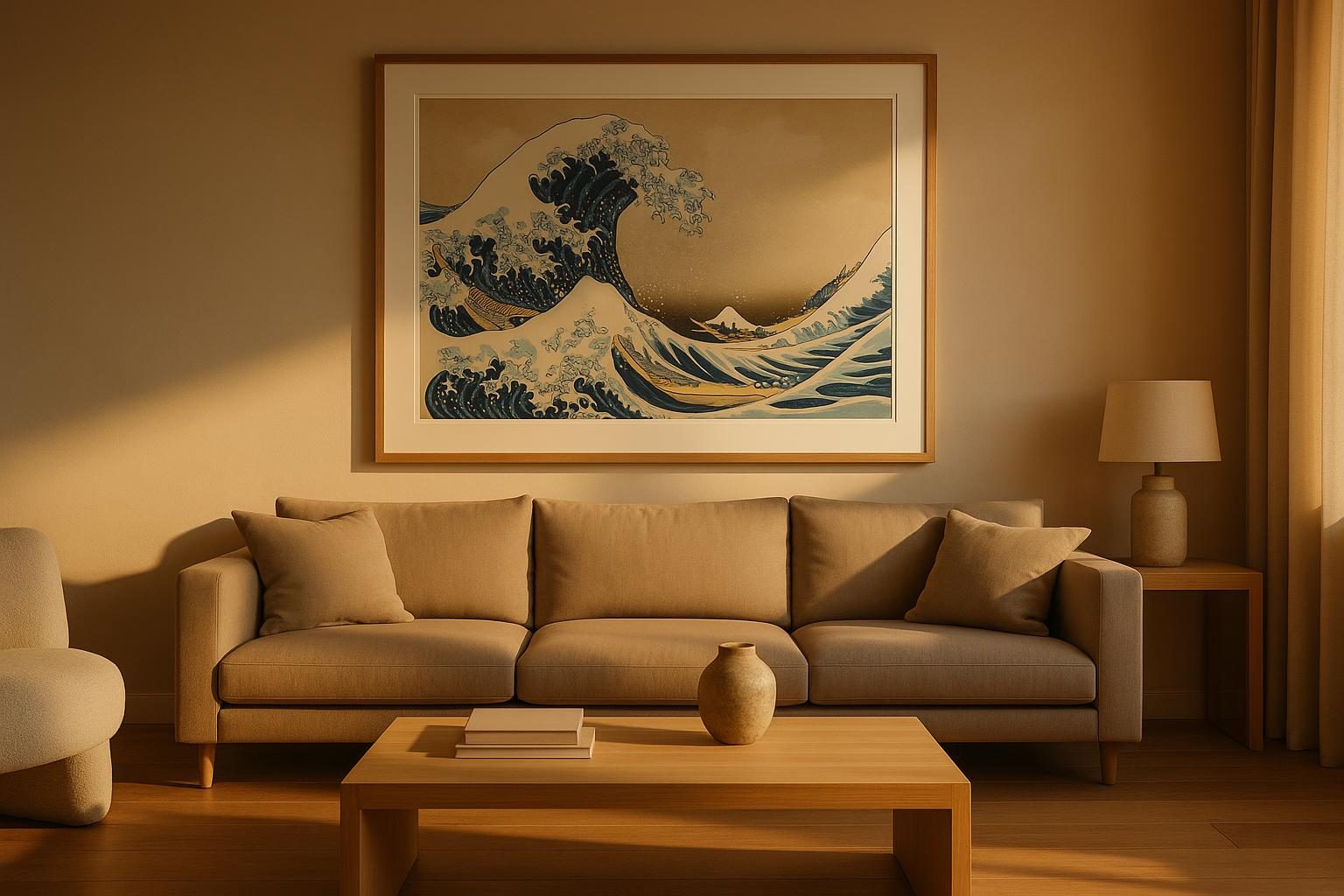
Hokusai's Great Wave off Kanagawa, framed in gold above a linen sofa in a warm, sunlit living room.

Museum-grade fine art, priced for a real home

Live with the masters.

The world's most beautiful art — restored by hand, printed to last, and hung where you actually live. Serious work, without the serious price.

The idea

Most of the greatest art ever made belongs to everyone. Almost none of it is printed well.

The masters live in open-access archives at astonishing resolution — then reach living rooms as blurry crops on thin paper. Provenance exists to close that gap: real scans of real works, prepared with curatorial care, printed on archival stock, and sold at real prices, shown here, not gatekept by a gallerist. We transparently price for quality, not in the 7 figures.

Museum-grade, restored

Archival giclée on cotton-rag stock, colour-managed and restored by hand where the years have taken their toll — made to hang for decades, not to fade by spring.

A cultivated eye

Not an infinite everything-store. Each house is a small, curated museum — the undeniable classics beside pieces you have genuinely never seen — chosen for people with taste.

Priced for your home

The same calibre of work a gallery would gatekeep and mark into the thousands, offered plainly — a cultivated, luxury piece at a middle-class price.

The houses

The catalogue raisonné: plate one to fifteen.

Every house below is preparing its opening catalog. Statuses are honest: none is accepting orders yet — each opens when its collection, its printing, and its rights review clear.

The Masters' Wing

painting's great traditions

Flagship

I

The Old Masters

Public-domain masterworks — the paintings everyone knows and the ones only the museums remember — curated, faithfully reproduced, and printed to archival standards.

The first house of the family and the model for the rest: a museum's respect for the work, a print shop's respect for the wall it hangs on.

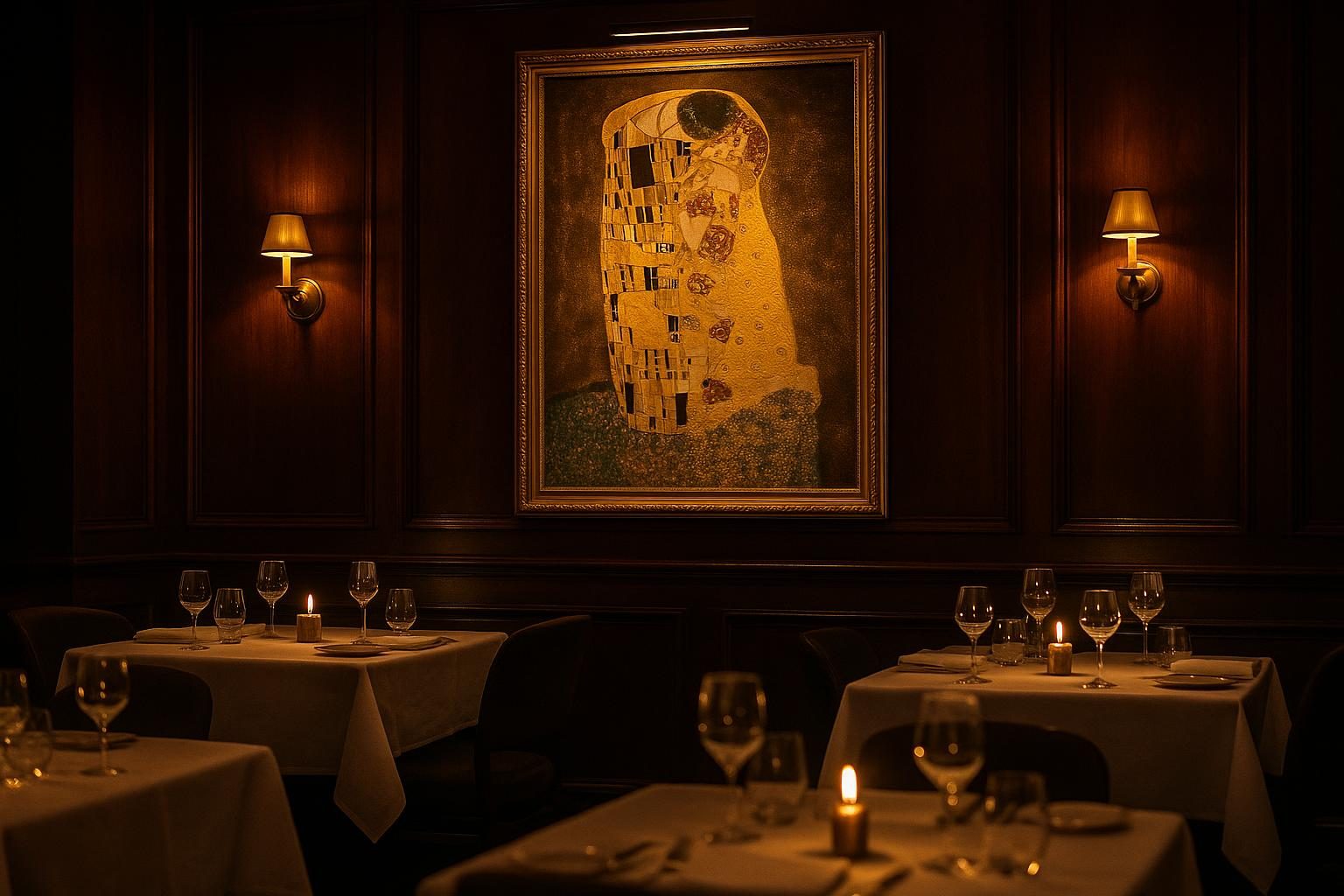
Van Gogh's asylum-year sky and Klimt's gold-leaf embrace, reproduced from open-access museum masters and sized to what each scan can honestly carry — never larger.

Digital downloads from $24. Archival prints, canvas, and framed pieces run to $455 — the ceiling set by the surviving scan, not by us.

Vincent van Gogh, The Starry Night — The Old Masters
The Starry Night — Vincent van Gogh, 1889.
Gustav Klimt, The Kiss — The Old Masters
The Kiss — Gustav Klimt.
Plate I — Masters' Wing Public-domain masterworks From $24.00 Opening
Utagawa Hiroshige, Kambara: Evening Snow, from the Fifty-Three Stations of the Tōkaidō — The Floating World
Kambara: Night Snow — Utagawa Hiroshige, c. 1833–34. Cleveland Museum of Art.
II

The Floating World

Classic Japanese woodblock art — ukiyo-e and shin-hanga, from the great wave to the quiet snow scenes.

Widely held as the masterpiece of Hiroshige's Tōkaidō series — and pure invention: Kambara's mild coast rarely sees snow like this. He printed a hush, not a place.

Plate II — Masters' Wing Classic Japanese woodblock art From $29.00 Opening
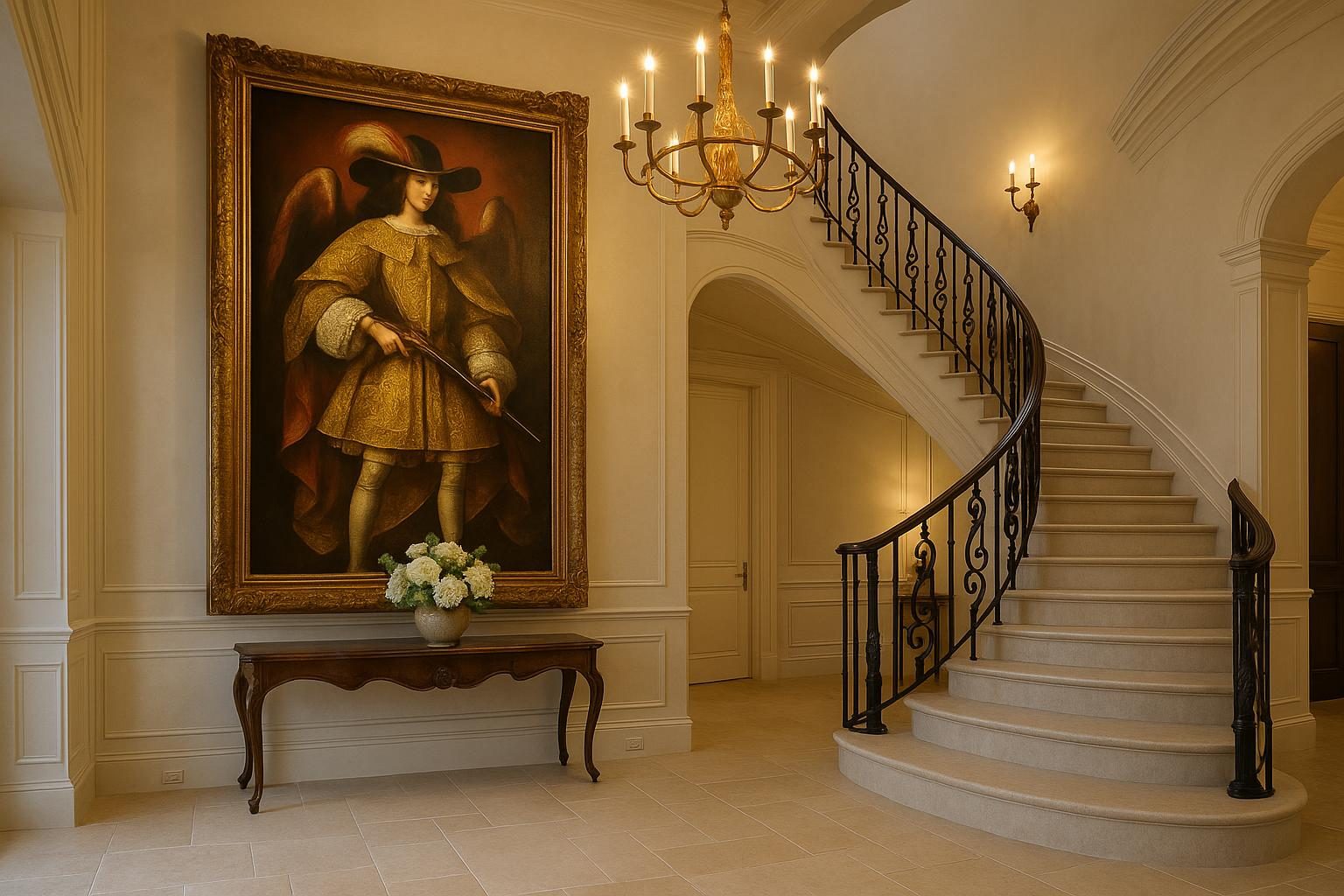
Cusco School, Archangel Eliel with Harquebus — Angels of the Andes
Archangel Eliel with Harquebus — Cusco School (anonymous), Peru, c. 1690–1720.
III

Angels of the Andes

The Cusco School — the radiant sacred painting of the colonial Andes, arquebusier angels and all.

A Spanish grandee's plumed hat and lace collar, a matchlock gun where a sword belongs — no European painting arms an angel this way. The costume is the whole argument.

Plate III — Masters' Wing The Cusco School From $24.00 Opening
Attributed to Aison, kantharos formed as the heads of a satyr and a woman, Attic red-figure — Bacchanal
The Kantharos — attributed to Aison, Attic red-figure, c. 420 BCE. The Metropolitan Museum of Art, 27.122.9.
IV

Bacchanal

Wine in art — the Dionysian canon, from classical revels to café posters, for the rooms where bottles open.

The god's own cup, formed as two faces set back to back — a satyr and a woman — so drinking it to the bottom means facing both at once.

Plate IV — Masters' Wing The Dionysian canon From $39.00 Opening

The Manuscript Room

the hand-made book
The Chi Rho Monogram, folio 34r, Book of Kells — The Scriptorium
The Chi Rho Monogram, folio 34r — Book of Kells, c. 800. Trinity College Dublin.
V

The Scriptorium

Illuminated manuscript pages — Kells, the Très Riches Heures, bestiaries — the art of the medieval book.

Folio 34r is the single most celebrated page in Western calligraphy — three Greek letters spun into knotwork, spirals, and hidden creatures by hands that left no names.

Plate V — Manuscript Room Illuminated manuscript pages From $24.00 Opening
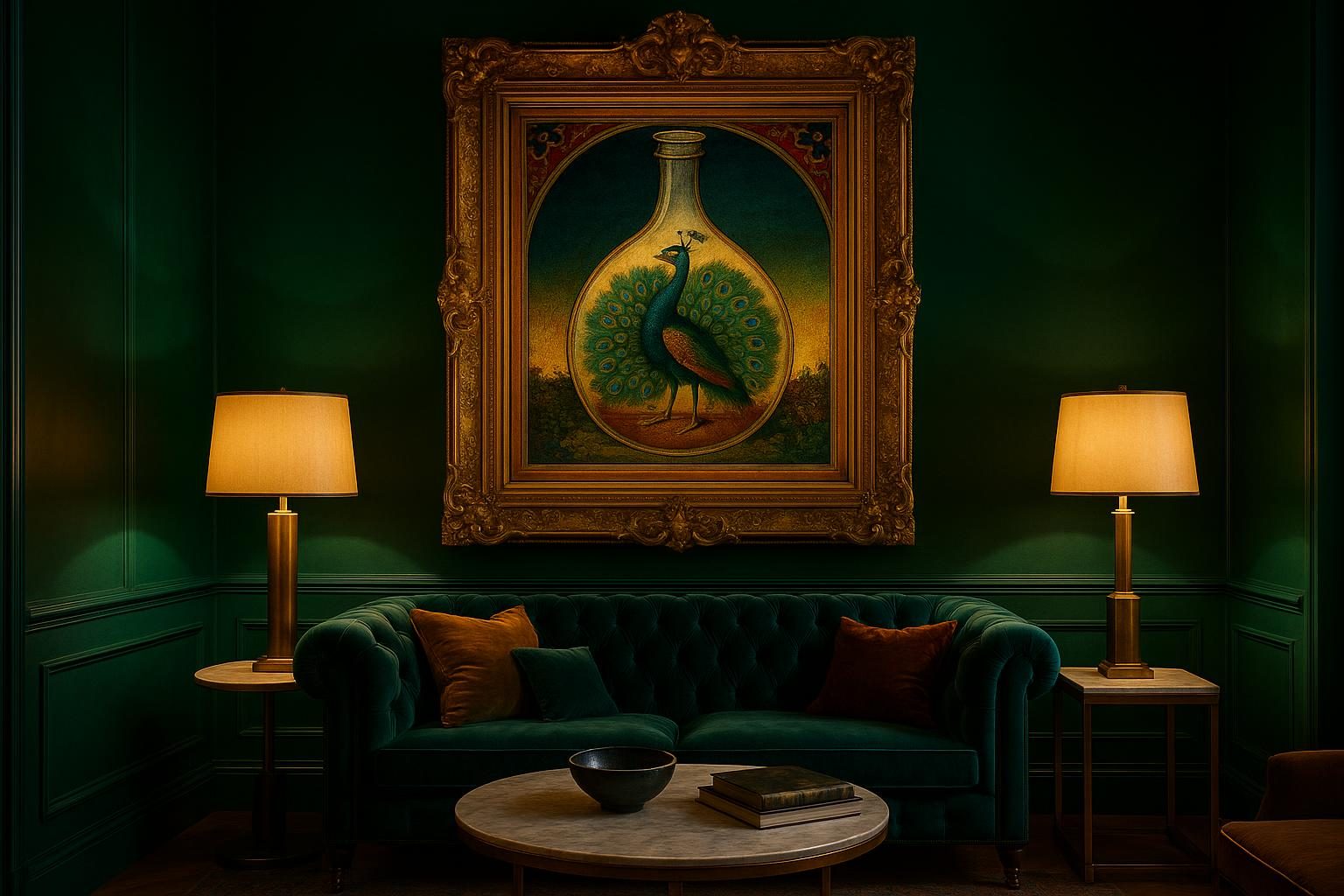
The Peacock's Tail, Splendor Solis (British Library, Harley MS 3469) — The Alembic
The Peacock's Tail, Splendor Solis — British Library, Harley MS 3469, 16th c.
VI

The Alembic

Alchemical and Hermetic manuscript art — Splendor Solis, Atalanta Fugiens — the emblem books of transformation.

The peacock's tail marks the alchemical stage where base matter first shows color — these emblem books painted the Great Work because the process itself was never meant to be written down plainly.

Plate VI — Manuscript Room Alchemical and Hermetic manuscript art From $24.00 Opening
Opening — sourcing in progress
VII

The Hermetica

The pictures people used to think with — esoteric printed art, from emblem plates to the Waite–Smith tarot.

Fifty-nine plates are catalogued and rights-cleared, from the Waite–Smith deck to the alchemical emblem books — the print-resolution scans are still being sourced, one by one. Opening when the last one resolves, not before.

Plate VII — Manuscript Room Esoteric printed art From $29.00 Opening

The Science Hall

knowledge, drawn beautifully
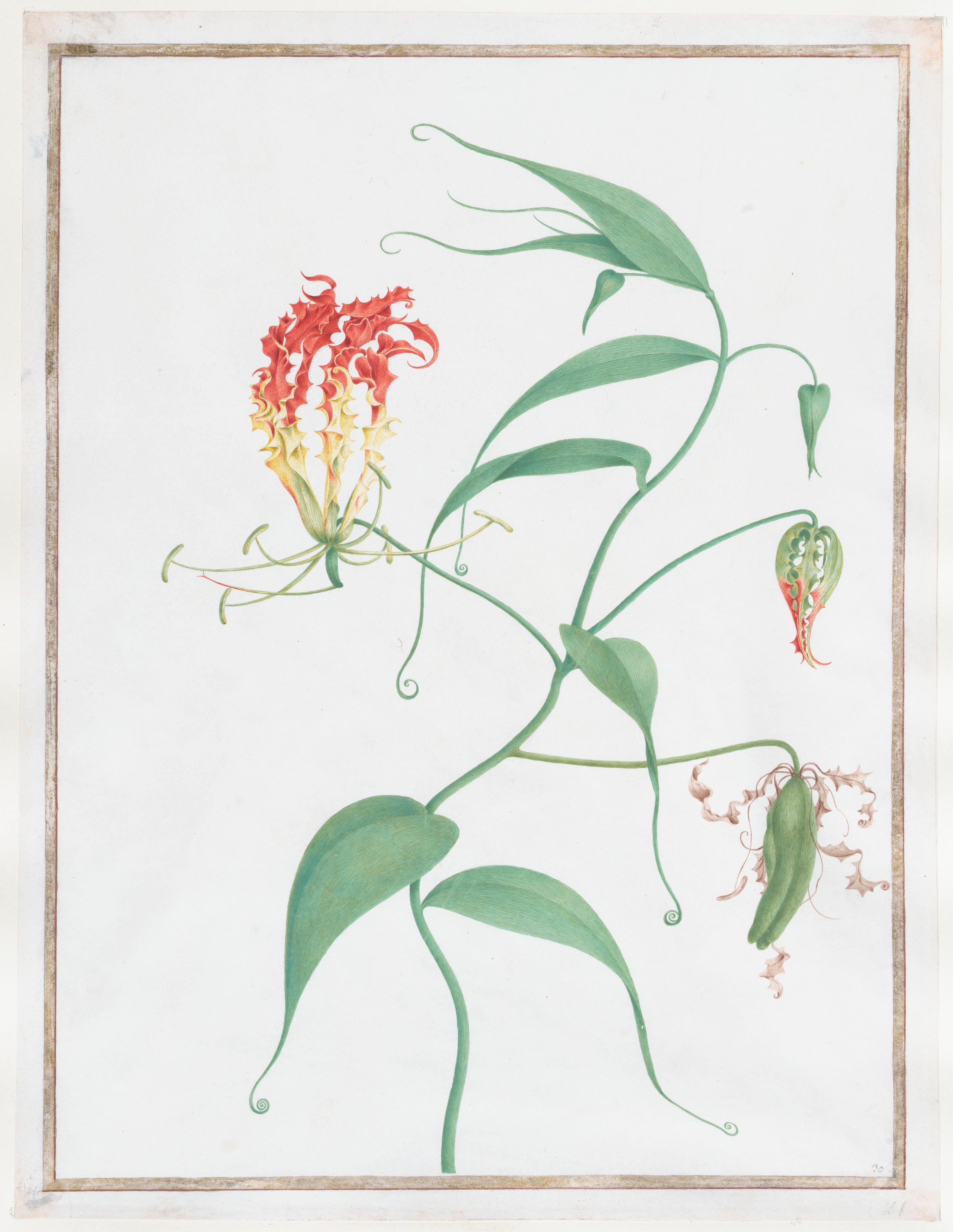
Pierre-Joseph Redouté, Gloriosa Superba — Cabinet of Curiosities
Gloriosa Superba — Pierre-Joseph Redouté.
VIII

Cabinet of Curiosities

Natural history's finest plates — botanical, celestial, ornithological, antiquarian — the world catalogued in ink.

Redouté painted flowers the way portraitists painted royalty — Gloriosa Superba's petals recurve like flame, precise enough to key the species from the print alone.

Plate VIII — Science Hall Natural history's finest plates From $19.00 Opening
Opening — sourcing in progress
IX

The Florilegium

The great flower books, printed for the wall — the golden age of botanical illustration.

Twenty-eight plates are catalogued across six of the great flower books, 1613 to 1834 — each provenance is being confirmed against the Biodiversity Heritage Library, the Met, and Kew before a single scan goes to print. Opening when sourcing clears.

Plate IX — Science Hall The great flower books From $29.00 Opening
Andreas Vesalius, the Muscle Man, De Humani Corporis Fabrica — The Anatomy Theatre
The Muscle Man, De Humani Corporis Fabrica — Andreas Vesalius, 1543. Wellcome Collection.
X

The Anatomy Theatre

The masterworks of anatomy — fine art from the history of medicine, drawn when science was still an art.

Vesalius's flayed figures stand alive, posed like classical statues in a continuous Italian landscape — set the plates side by side and the countryside runs unbroken beneath the dissection.

Plate X — Science Hall The masterworks of anatomy From $29.00 Opening

The Map Room

the world, imagined
Martin Waldseemüller, Universalis Cosmographia (1507) — Cartographer's Dream
Universalis Cosmographia (the Waldseemüller map) — Martin Waldseemüller & Matthias Ringmann, 1507. Library of Congress.
XI

Cartographer's Dream

The greatest antique maps in history — 15th to 17th century, when the edge of the map was the edge of the known.

Called America's birth certificate: the first printed sheet to carry the word "America," lettered by a print shop in the mountains of Lorraine. The only surviving copy sold to the Library of Congress for ten million dollars.

Plate XI — Map Room The greatest antique maps in history From $29.00 Opening
Andreas Cellarius, The Copernican System, Harmonia Macrocosmica (1660) — The Firmament
The Copernican System, Harmonia Macrocosmica — Andreas Cellarius, 1660.
XII

The Firmament

The great celestial maps — constellations, cosmographies, and the sky as its charters imagined it.

The Sun enthroned at the centre, the Earth demoted to just another planet — Cellarius diagrammed the idea that moved the Earth with the same gold-and-azure splendor as the geocentric system it overthrew.

Plate XII — Map Room The great celestial maps From $29.00 Opening

The Poster Hall

the printed street
Poster for Der Golem, wie er in die Welt kam, directed by Paul Wegener, 1920 — The Picture Palace
Der Golem, wie er in die Welt kam — German theatrical poster, UFA, 1920. Public domain (pre-1931).
XIII

The Picture Palace

Public-domain film posters and lobby cards through 1930 — cinema's first golden age, on paper.

Hans Poelzig's Expressionist sets made the film a landmark of design — Paul Wegener's clay man fills the sheet like masonry, a body built, not born.

Plate XIII — Poster Hall Public-domain film posters and lobby cards From $29.00 Opening
Alphonse Mucha, Gismonda (1894) — The Poster Atlas
Gismonda — Alphonse Mucha, 1894.
XIV

The Poster Atlas

The world's great poster schools, organized as national wings — an atlas of the printed street.

Mucha drew this Sarah Bernhardt playbill in eleven days over Christmas 1894 — it papered Paris overnight and invented the look the world still calls Art Nouveau.

Plate XIV — Poster Hall The world's great poster schools From $29.00 Opening
Henri Privat-Livemont, Absinthe Robette (1896) — The Lost Bar
Absinthe Robette — Henri Privat-Livemont, 1896. Library of Congress.
XV

The Lost Bar

Drinks advertising, 1880–1930 — absinthe, beer, and bitters, from the era when the bar was an art gallery.

Within twenty years, the bans of the 1910s erased absinthe and every brand that sold it; this poster is one of the only places the drink still exists. The category survives only as art.

Plate XV — Poster Hall Drinks advertising, 1880–1930 From $29.00 Opening

In your space

Bought to be lived with.

Great art earns its place on a wall — a living room, a study, a room where you do business. A few of ours, at home.

A framed print of Hokusai's Great Wave off Kanagawa above a linen sofa in a warm, sunlit living room.
A large framed Cusco School archangel painting on the feature wall of a grand staircase entryway.
Klimt's The Kiss framed and spotlit on dark panelling above candlelit tables in a fine-dining room.
An iridescent alchemical peacock plate framed in an emerald, jewel-toned collector's sitting room.
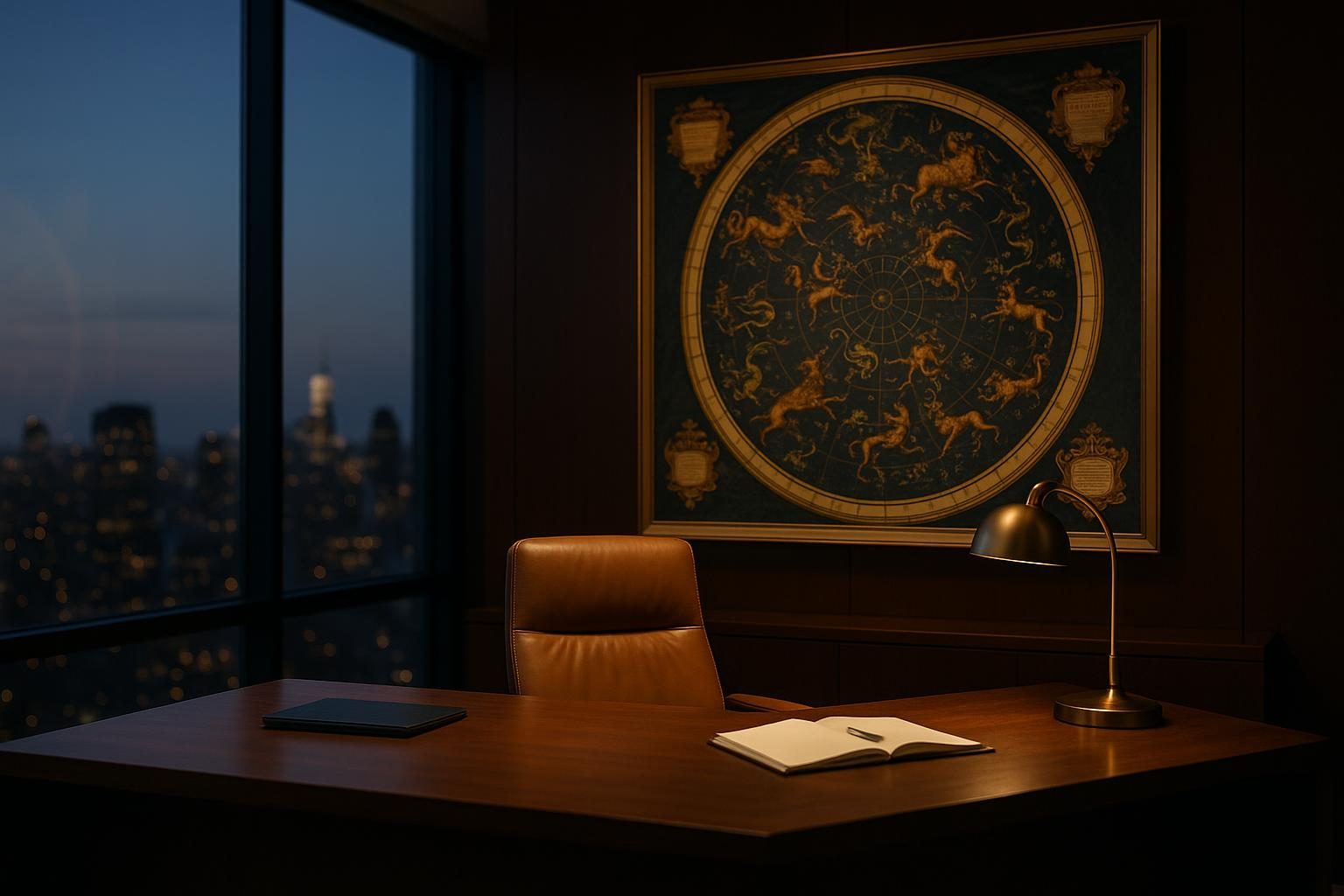
An antique celestial chart framed on a dark walnut wall behind an executive desk at dusk.
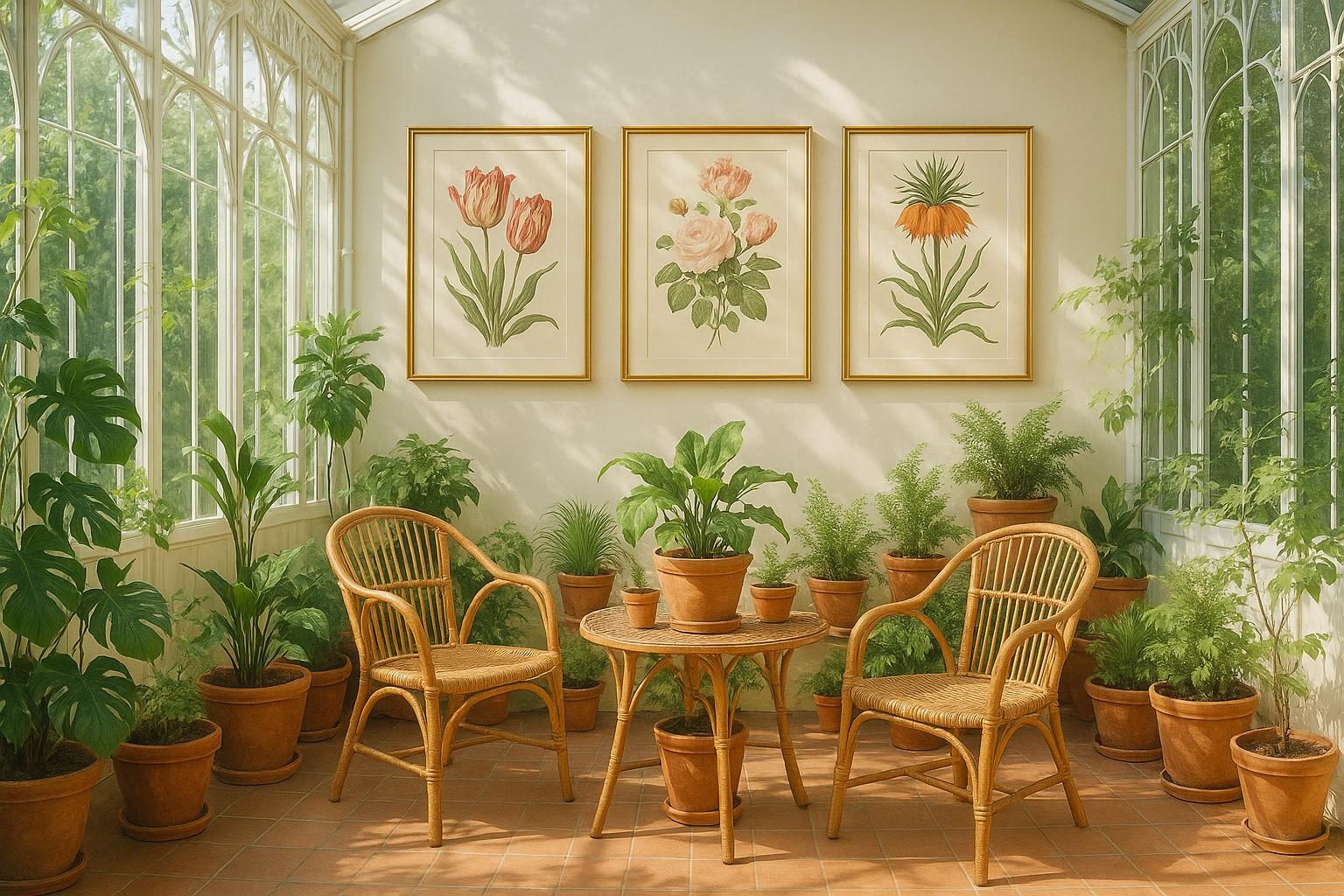
Three botanical flower prints as a triptych in a bright, plant-filled garden conservatory.
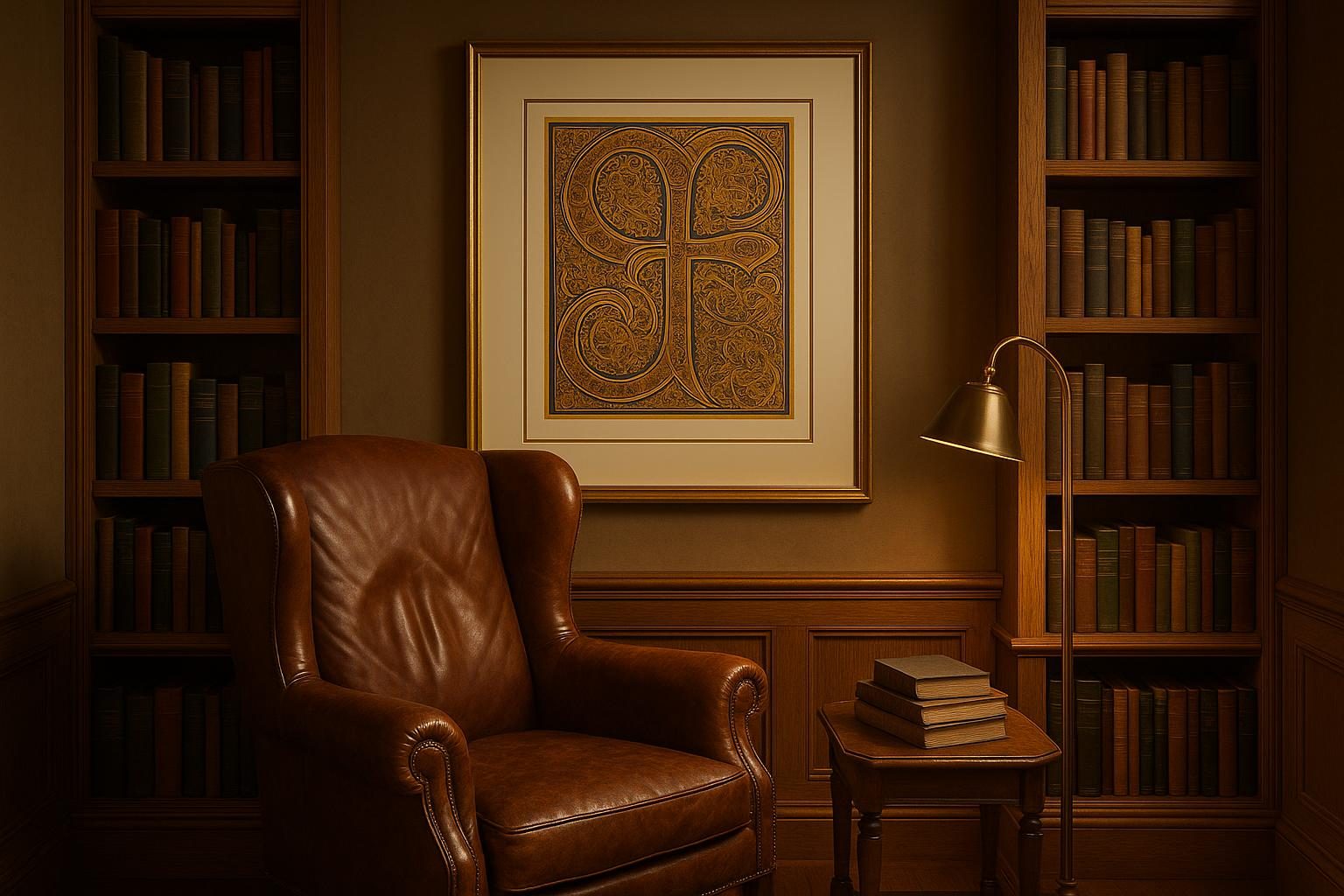
An illuminated Book of Kells manuscript page framed in a warm private library reading nook.

The standard

Four promises, kept in every house.

These aren't marketing lines — they're the family's standing production rules, applied to every piece in every catalog before it goes on sale.

I

The artwork, not the page

We crop to the painted, illuminated, or engraved work itself — never shipping the archival stamps, folio numbers, or blank parchment margin around it. What's part of the composition stays; page apparatus goes.

II

Sized to the scan that survives

Print sizes are capped by the real resolution of the source master. If the surviving scan can't honestly carry a 40-inch canvas, we don't sell one — we find a better master or cap the size.

III

The work, and the wall it hangs on

Each plate is the real artwork, at its true proportions — and, because art is bought to be lived with, we also show it in place: framed on the walls of homes, galleries, and rooms of business, the way any gallery hangs its work to sell it. We restore honestly when necessary, so that you receive a Masterpiece.

IV

Archival, or not at all

Giclée printing on archival stock through professional print partners, in editions and formats chosen per work — made to hang for decades, not seasons.